Dee Estuary Birding
Monthly Newsletter...
June 2026
Newsletter
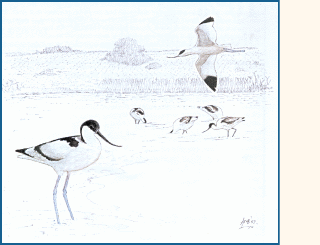
Wetland Bird Survey 2024/25
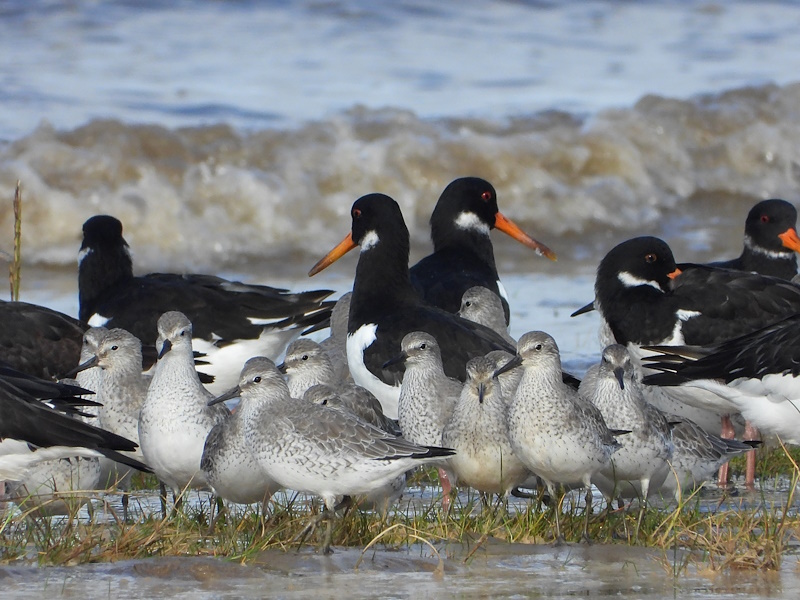
The data from the 2024/2025 Wetland Bird Survey (WeBS) has been published. As well as the local written report for the Dee Estuary (Ref 1) (with many thanks to Neil Friswell and Colin Wells) there are all the counts from the many hundreds of sites across the country, and these can be accessed for free online (Ref 2). This is a wonderful resource as rhe data goes all the way back to at least the 1970s. In addition to all this the BTO publish a summary report, Waterbirds in the UK 2024/2025, which is always a fascinating read with articles on trends, several Species Focus articles and much else (Ref 3). In this Newsletter I shall first summarise this report before going into more detail for several species here on the Dee Estuary.
Waterbirds in the UK 2024/25 Summary Report
The Summary Report can be downloaded by Clicking Here or can be read from the BTO WeBS page (see references below).
One of the first Tables in the report is a list of
Principal Sites for non-breeding waterbirds and here we learn that in
2024/25 the Dee Estuary was the second most important site in the
country, second only to the much bigger Wash. So several species had
good numbers here on the Dee including Oystercatcher, Knot, Dunlin,
Pink-footed Geese and Black-tailed Godwit.
With the completion of the Winter Gull survey (2023/24-2025/25) there is a lot about gulls with no less than six Species Focus articles. Mediterranean Gulls are still quite scarce here on the Dee but the Species Focus tells us that 3,482 pairs bred in the UK in 2023 with over 50% of these in Langstone Harbour alone! For the over wintering survey the number was 4300 with most along the south coast - colour ringing tells us many more travel further south. But the most remarkable gull count was 64,650 Black-headed Gulls on the Mersey Estuary in January 2025. According to the WeBS data on-line this is the second highest WeBS count of Black-headed Gulls ever made in the UK, the highest being 67.840 at Bewl Water in Kent in 2006/07. The Mersey Estuary's previous record was 12,162 in 2021/22 and that was regarded as exceptional.
There is one other article which caught my eye - titled Arctic Indicators - it is about monitoring the health of Arctic-breeding waterbird populations by using counts of Arctic breeding species which migrate to and through the UK and Netherlands. The article in the report is a very brief summarry of that published in Bird Conservation International which is free to download. Very briefly the Arctic breeding waders and wildfowl are reasonably healthy with those breeding in Canada, Greenland and Iceland doing better than those breeding in Arctic Eirope and Siberia.
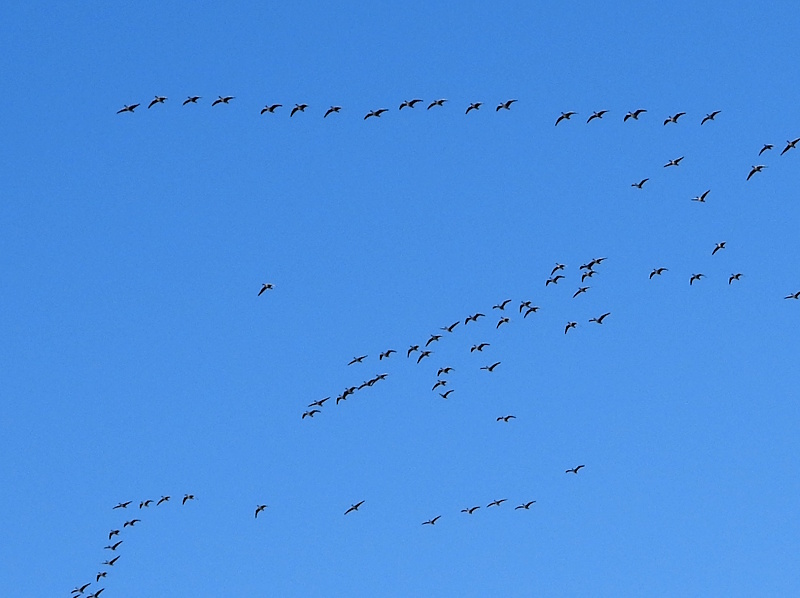
Dee Estuary
Now for a bit more detail of nine species on the Dee
Estuary which I've picked out from the reports.
Pink-footed Goose
In 2024/25 the Dee Estuary was the eighth most important site in the
country for Pink-footed Geese with a count of 20,000 in early March.
Nearly every other site in the UK have peaks between October and
December but, interestingly, two other sites in north-west England, the
Ribble and Solway, also had peaks in March. It is probable that this
surge in numbers in north-west England in early spring is due to a
movement west of Pinkfeet which wintered in Norfolk.
Wigeon, Teal and
Shelduck
2016/17 saw a significant increase in Wigeon numbers on the Dee
Estuary and they have remained high with a peak of 8176 in October
2024. Numbers of Teal were disappointing in 2023/24 so it was good that
they bounced back with a peak of 5188 in October 2024. Shelduck numbers
have shown a slow decline over the past seven years and they peaked at
7009 in October 2024 - but still the third highest in the country. The
five year average is 8,133.
Little Egret
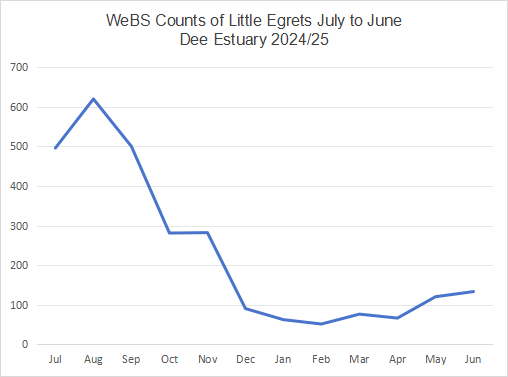
with a record count of 620 in August 2024 the Dee Estuary had the
highest number in the country for 2024/25, and it was quite a big jump
from the previous record of 476 in September 2022. The monthly
distribution chart below
illustrates the dramatic decline in numbers after the late summer/autum
peak - where do they over-winter??
Oystercatcher
There was a peak count of 31,852 Oystercatchers in October 2024, the
highest count this century and the highest since September 1995 when
33,012 were present. The Dee Estuary is the second most important site
in the country for this species with Morecambe Bay the most important
where numbers also peaked in October.
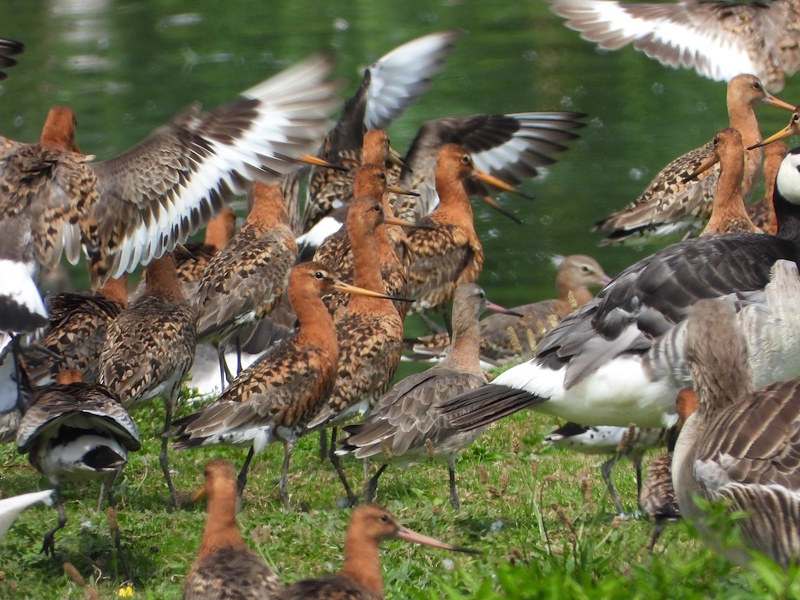
Black-tailed Godwit
For the second year in a row numbers reached over 10,000 and the
2024/25 max was 10,565 in August 2024. The most important roosting site
is Caldy Wildfowl Collection which is a few minutes walk
from my house and I do regular counts there. For the August 2024 WeBS
count I had 5,140 with most of the rest at Oakenholt/Connah's Quay
with 4,000. For both 2023/24 and 2024/25 the Dee Estuary had the
highest
numbers in the country, and is the second most important site according
to the moving five year average.
Turnstone
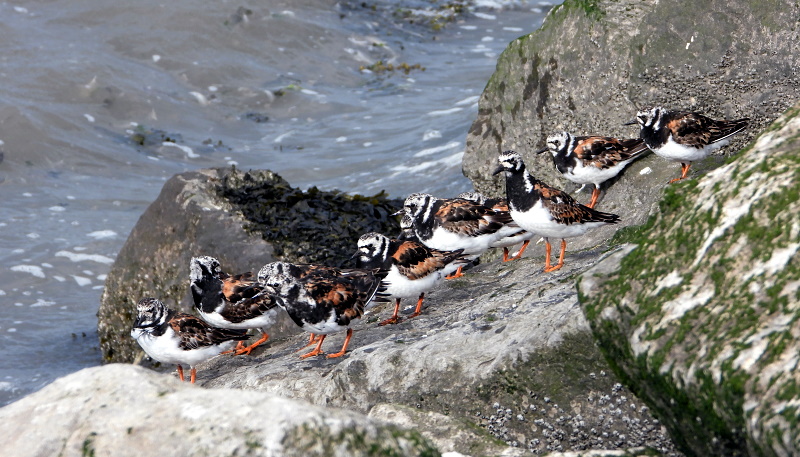
Turnstone numbers on the Dee have shown a steady decline since the
1980s and 1990s when numbers were typically between 800 and 1,000. For
the past 15 years or so numbers have plateaued out at around 200 to
300, but November 2024 saw a welcome rise to 450. Most Turnstones are
seen at Hilbre and also roosting around West Kirby Marine Lake where
they are remarkably tolerant of people.
Sandwich Tern
The Dee Estuary is an important post-breeding site for Sandwich Terns,
as is the whole coastline from Rhos-on-sea east to Crosby and Formby.
They are constantly on the move and peak numbers rarely coincide with
the WeBS count day. Since a max of 2800 in 2018 counts have fallen
significantly but 1413 in July 2024 was the highest for six years.
References
1. Neil Friswell (and approved by Colin Wells), Dee Estuary and North Wirral Foreshore, WeBS Annual Report 2024/2025.
2. Frost, T.M, Calbrade, N.A., Birtles, G.A.,
Feather, A., Hiza, B.M., Caulfield, E.B., Balmer, D.E., Peck, K.,
Wotton, S.R., Shaw, J.M. & Woodward, I.D. 2026. Waterbirds in the
UK 2024/25: The Wetland Bird Survey and Goose & Swan Monitoring
Programme. BTO/RSPB/JNCC/NatureScot. Thetford - available on-line - click here (scroll down to "Numbers and trends:
view species and sites data" and click on the link.
3, Frost, T.M. et al., Waterbirds in the UK 2024/25 (Summary Report), available on-line Click Here.
Richard Smith
Colour Ring Report
Avocets
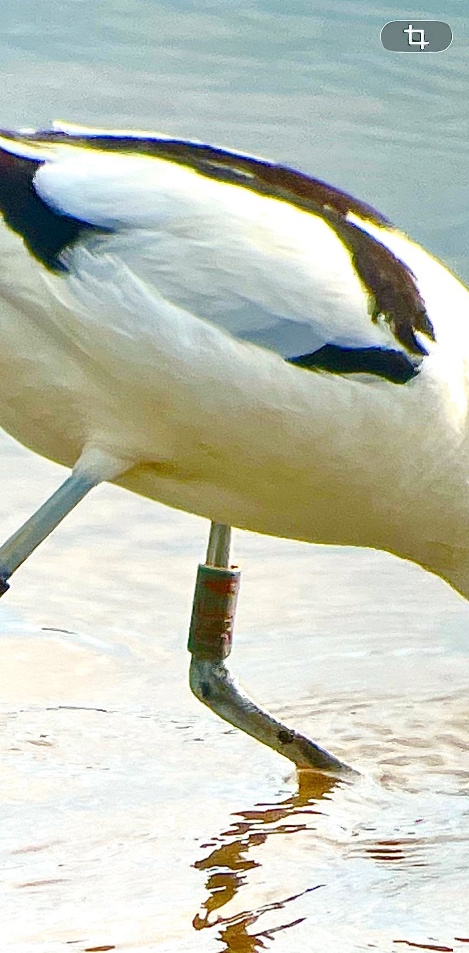
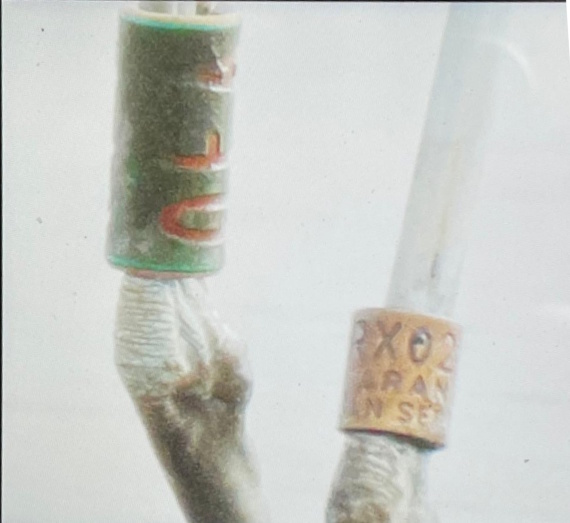
Green (OFA)
Ringed at Donana National Park, Spain, July 2017.
Recorded at Burton Mere Wetlands on 01/05/2026.
Another great record of a Spanish ringed Avocet
following the one we had in March 2025. There was some difficulty
reading
the ring but it eventually came near enough to get some decent photos,
thanks to Richard and Joe. The red lettering doesn't show well against
the green, but we think the letters would have been originally white
and have become stained red over the years. The ring on last year's
bird was also badly stained.
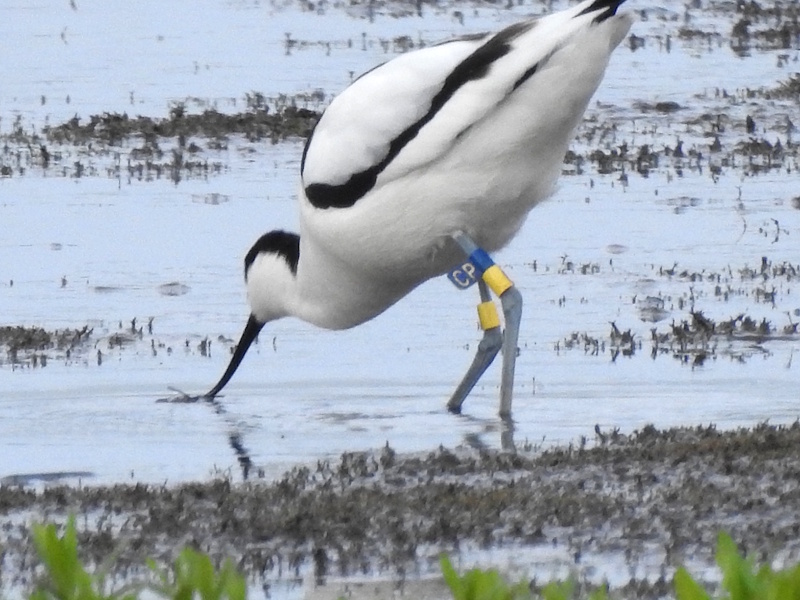
Blue flag (CP) Yellow - Yellow
Ringed at Conder Green in July 2024, as a chick.
After staying at Conder Green until August 2024 it moved to the south
coast of the Humber estuary where it stayed until mid-winter, then it
was at RSPB Blacktoft Sands in in May 2025 and again at the Humber in
August 2025. There were no further sightings until it was recorded at
Burton Mere Wetlands in late April and early May 2026.
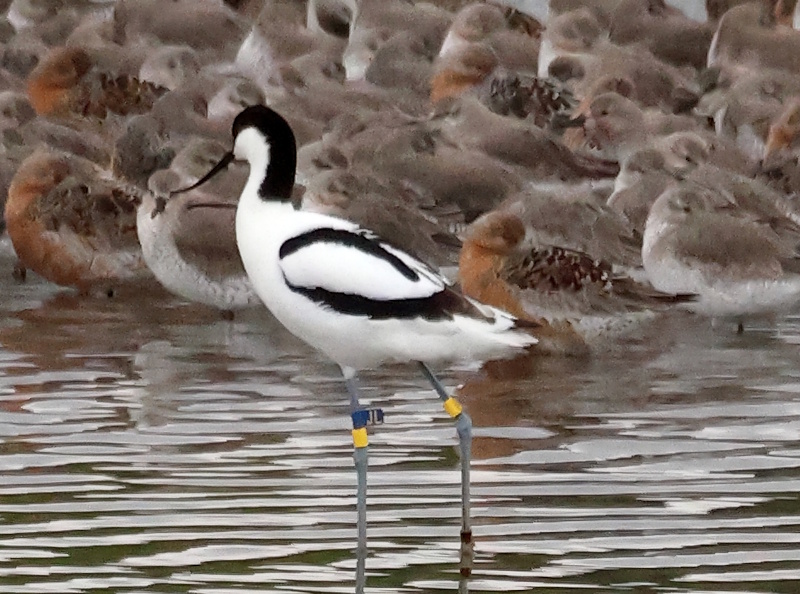
Ringed at Martin Mere WWT in May 2025 as a chick.
August 2025 saw it at RSPB Blacktoft Sands but there were no further
records until it turned up at Goldcliff Lagoons, Newport Wetlands, in
early April 2026 before being seen at Burton Mere Wetlands in late
April and early May 2026.
Both these Blue flagged Avocets 'disappeared' for
the
whole of last winter. The majority of the UK's Avocets are thought to
winter on the south coast but a significant number probably make their
way to the continent with birds both in the Netherlands and the French
Atlantic Coast - so maybe that's where they spent the winter.
Knots
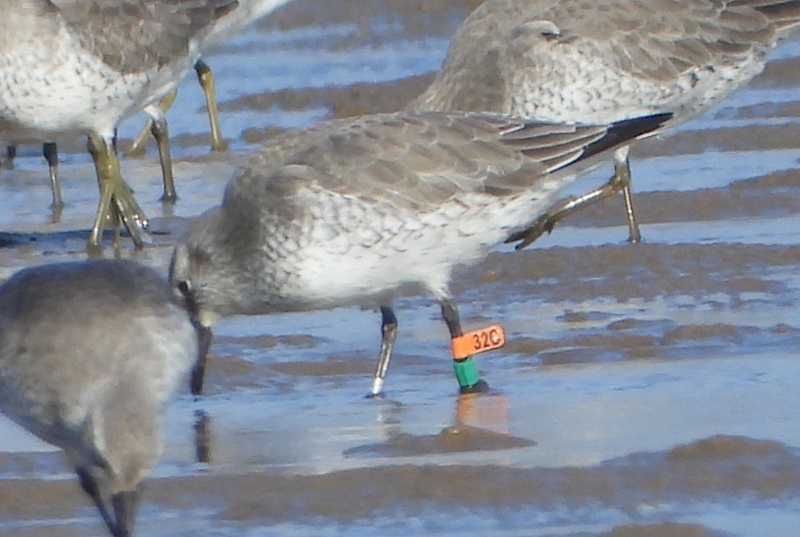
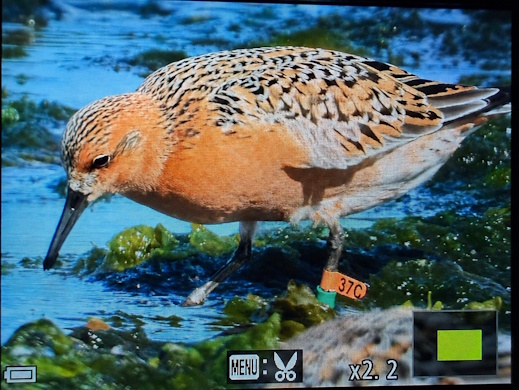
Otange flag 32C and 37C were ringed at Hoylake in
February 2024.
Both have been regular in Liverpool Bay since and both were last seen
locally at Thurstaton in March 2026.
They were recorded at Porsanger fjord, on the northern tip of Norway,
in the third week of May, 2026.
We know from colour-ringing that the Liverpool Bay
population of Knots
fly to Iceland in early May to feed up before their onward journey to
Greenland and northern Canada to breed. There is another route Knots
use to get to Greenland and Canada and that is via the fjords on the
northern tip of Norway and, again, colour ringing tells us that the
birds which use this route are ones which have moulted into breeding
plumage in the Waddensea. Since colour ringing started in Liverpool Bay
in 2017 it's virtually unknown for these Liverpool Bay birds to use the
Norway route
with just six orange flagged birds recorded there in eight years,
compared to more than 400 recorded in Iceland. So it was a bit of a
surprise to not only find two orange flagged Knots there this May but
that both had used the Icelandic
route in previous springs. Knots are usually very site faithful so we
wonder why they've changed!
Herring Gull
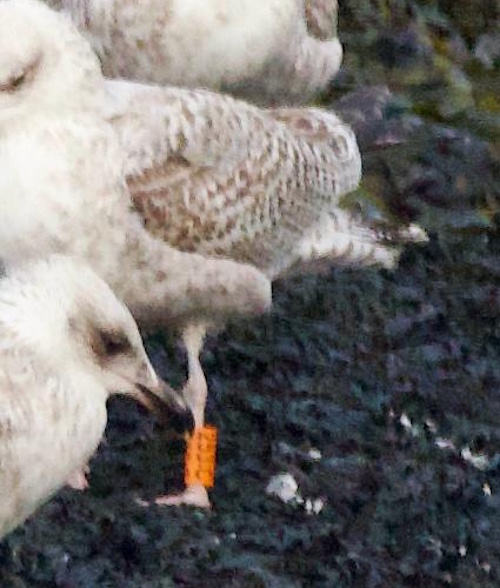
Orange 253:C
Ringed
on Mew Island (adjacent to Copeland Bird Observatory), off the north
east coast of Northern Island, in July 2024 as a chick.
Recorded on Hilbre on 26/04/2026.
We see surprisingly few Irsh ringed gulls so it was good to get this one ringed by the Copeland Bird Observatory.
Common Crane
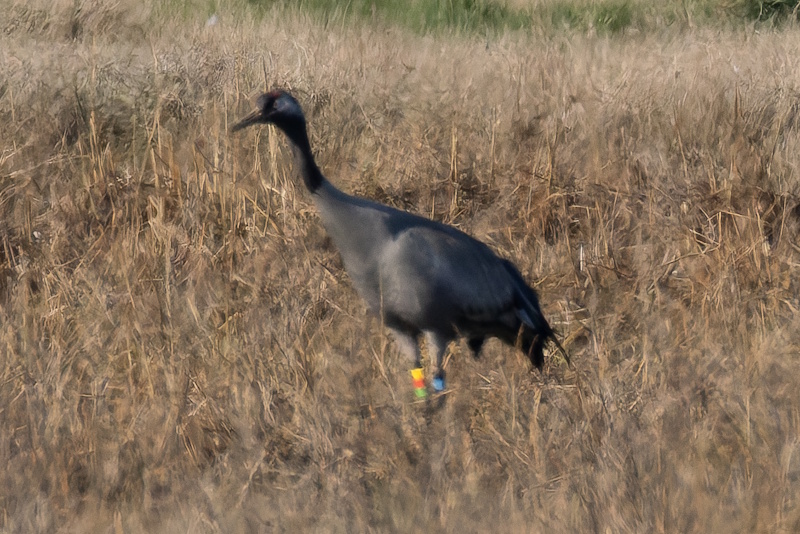
Readers of the May
2026 Newsletter will remember the excitement caused by the arrival
of this colour-ringed Common Crane, named 'Sherry' by the RSPB. Having
been ringed in Somerset and wintered in France Sherry ended up breeding
in Aberdeenshire in 2024 and 2025, much to everyone's surprise. This
spring she had already been spotted again in Aberdeenshire in early
April and seemingly paired off. So it was with some disappointment when
she turned up off Heswall and Parkgate on April 22nd, and it was
assumed something must have happenned to her partner to make her fly
south with the breeding attempt abandoned.
But then I got an email from Scotland on May 4th to
say she was back in Aberdeenshire and with a partner! She was
photographed and the rings were clearly seen both here and in Scotland (see photos above and below)
so there is no doubt it is the same bird. Maybe Sherry just wanted a
weekend break away from home before getting down to some serious
nesting. Perhaps, more likely, something did happen to her original
partner (predated?) and when she returned she managed to find a new
mate.
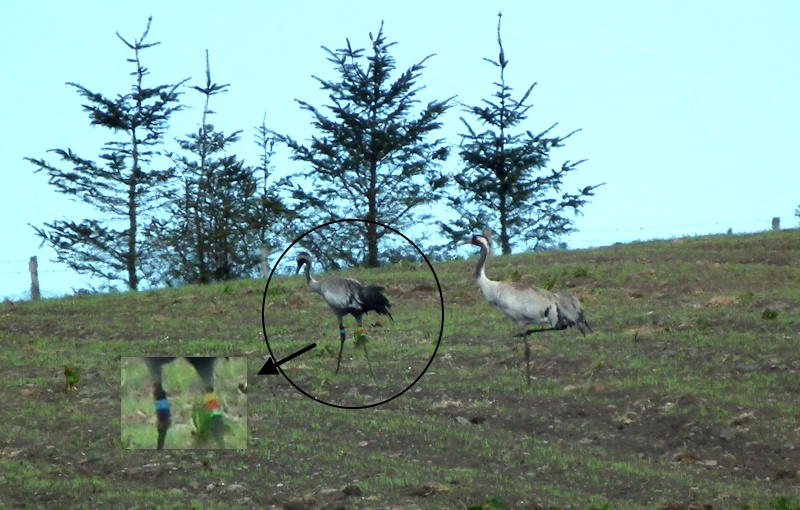
Colour Rings were recorded by Richard
Smith, Stephen
Hinde, Steve Williams (Hilbre
Bird Observatory), Richard Speechley, Carole Killikelly, Joe Downing, Colin Schofield, Phil Woollen and Amanda Biggins,
Richard Smith
May Bird News
The Bee-eater which flew south-east over West Kirby on the 7th was undoubtedly the rarity of the month but was seen only too briefly, and not relocated despite much searching.
The spring migration was still underway although a bit underwhelming - there have been just six Spotted Flycatcher records this spring, including two in late April. The only Yellow Wagtails reported in May were four at Leasowe on the 1st, and there were nine Whinchat records through the month, mainly along North Wirral.
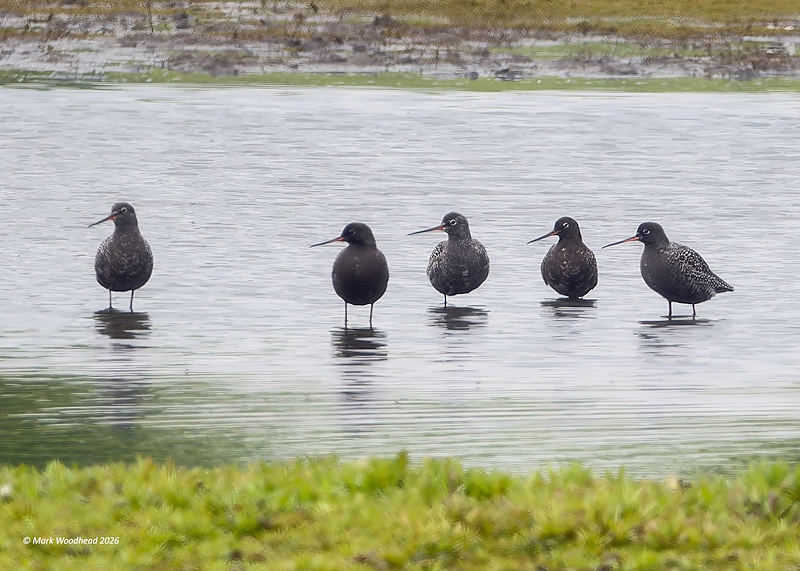
Early in the month Burton Mere Wetlands had 3 Spoonbills, 2 Wood Sandpipers, 10 Spotted Redshanks and 1,500 Knot. There were also three Garganeys there including two drakes, possibly breeding?? Definently breeding were at least ten pairs of Mediterranean Gulls seen among the Black-headed Gulls from the Reception hide. There were good numbers of waders elsewhere including a peak passage of 234 Whimbrels at Heswall on the 6th. But it was the Point of Ayr which was attracting the largest amount of waders with a maximum count of 800 Bar-tailed Godwits on the 3rd. Remarkably, we think that count may be the highest recorded in Wales since 1,000 were on the Burry Inlet in February 1982! Of course, counts of 1000+ are made routinely at Seaforth (including in May) just a few miles to the east, and along the Sefton coast so maybe that's where the POA birds have come from. Point of Ayr also had maximum counts of 670 Sanderling, 400 Dunlin, 300+ Ringed Plover and 90 Sandwich Terns.
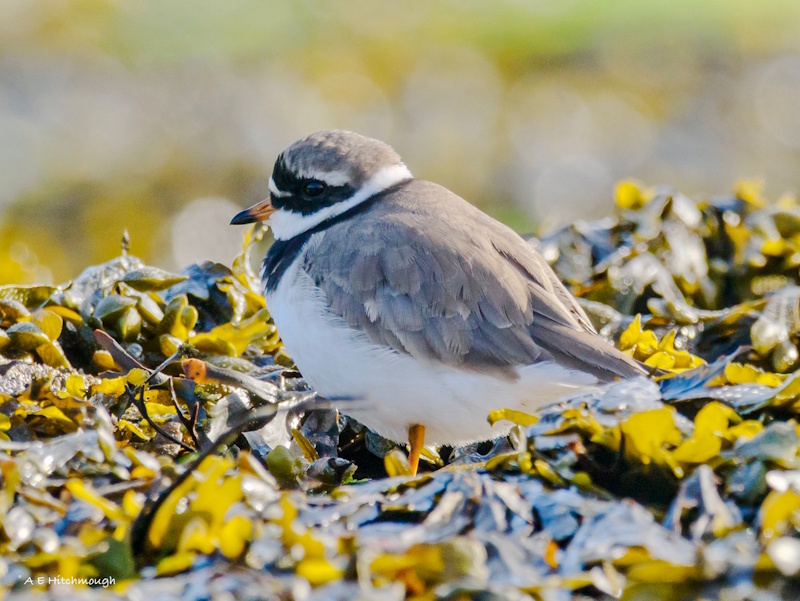
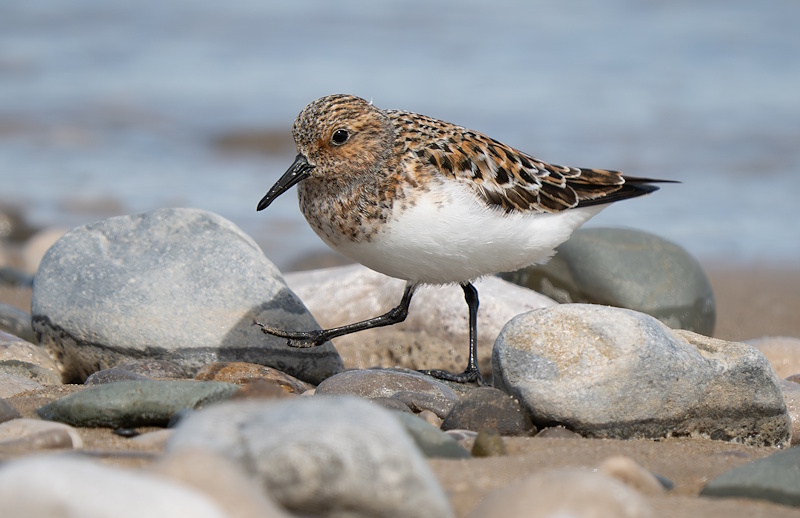
Hilbre also saw waders on passage including 360 Sanderling on the 10th and 250 Ringed Plover on the 25th. Out to sea there were 350 Common Scoters on the 3rd, plus two Black-throated Divers and eight Arctic Terns on the 20th. There were over 100 Sanderlings at Gronant at the end of the month and at least 230 Little Terns.
Four Ospreys and three Red Kites flew over during the month, given the time of year I assume these must be non-breeders.
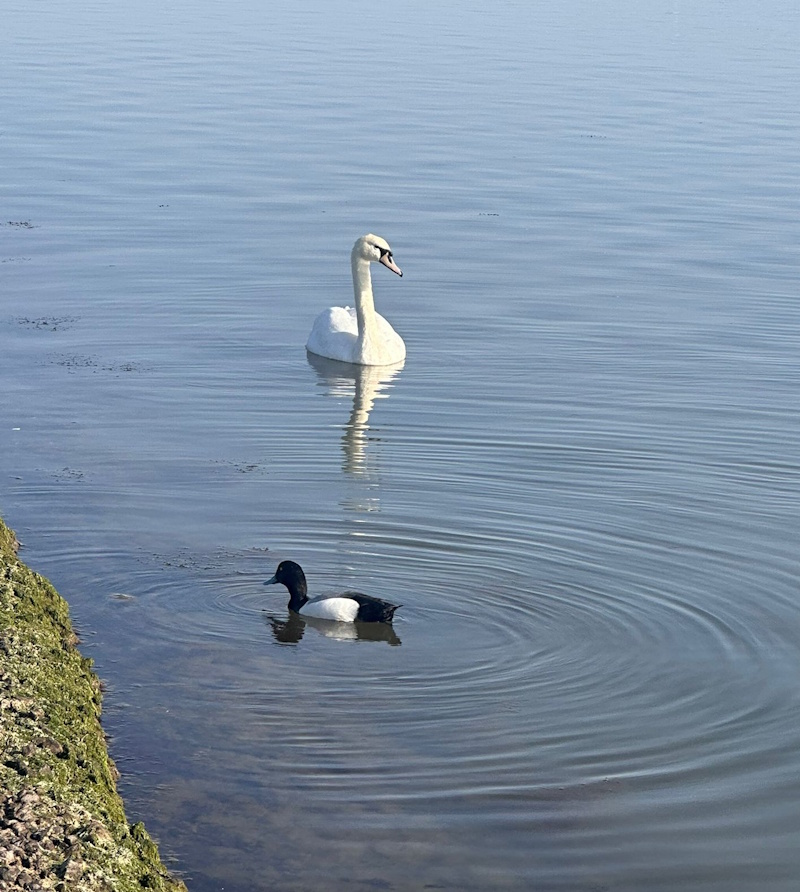
The drake Scaup which arrived on West Kirby Marine
Lake in early January is still here and now remarkably tame, it appears
to have befriended a Mute Swan.
What to expect in June
June is an intriguing month, especially for waders. Early in June they are still passing through on their way north and will include Sanderlings, Dunlin and Ringed Plover - these late migrants will have wintered in Africa and most likely will breed right up in the high Arctic. Rarer waders such as Little Stints and Curlew Sandpipers are also a possibility. But, as early as mid-month some birds will already be returning and will include Spotted Redshanks, Wood Sandpipers and Common Sandpipers. A feature of the last two Junes has been the presence of thousands of non-breeding Knots with 4,000 mainly 2cy birds at Leasowe in 2024 and up to 2,500 at Burton Mere Wetlands, also with some Bar-tailed and Black-tailed Godwits, last year. We nearly always seem to get a few Whimbrels over-summering at Heswall as well as the more usual Oystercatchers.
By the month end there will be a niticeable increase
of gulls on the estuary, including some Mediterranean Gulls which will
still be in full s/pl, and the first post-breeding Sandwich Terns. Any
fresh westerly winds should be good for sea-watching with Gannets and
Manx Shearwaters to look out for, and a gale may well blow in a Storm
Petrel or two.
June Highest
Tides (Liverpool Gladstone Dock):
16th 12.42hrs (BST) 9.4m
17th 13.35hrs (BST) 9.4m