Dee Estuary Birding
Monthly Newsletter...
March 2026
Newsletter
Highlights - March 2025 to February 2026
It's that time of year when I write a review of
the previous 12 months. When I started writing this one in February I
was
thinking what a quiet 12 months it had been - then I remembered about
the Black Scoter in spring, followed by the Glossy Ibis 'invasion' , a
very good Curlew Sandpiper passage, two periods of westerly gales
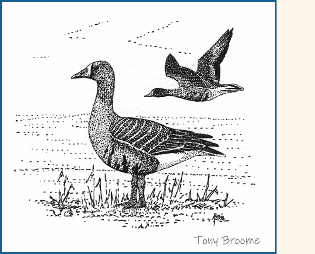
blowing in Leach's Petrels, the White-fronted Goose invasion.....
Spring
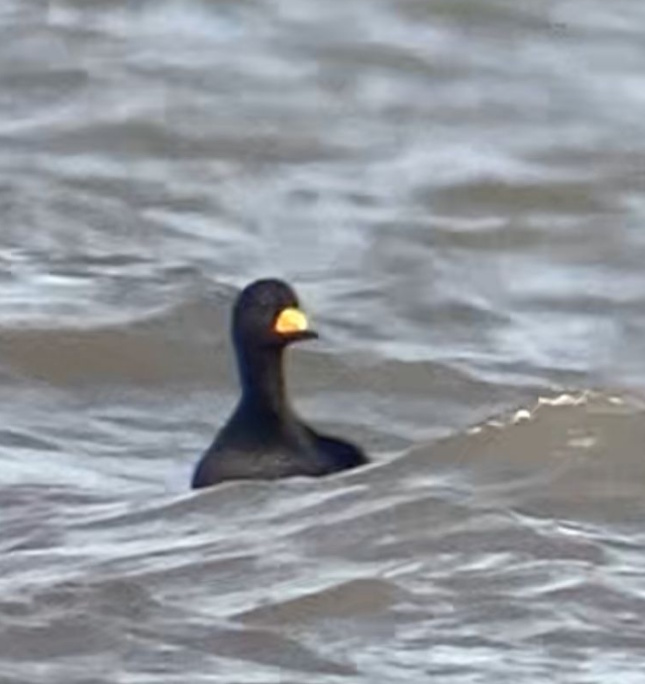
A Black Scoter was a great find in rafts of Common Scoters off Hoylake in early March, a first for Cheshire & Wirral - they are less than annual in the UK with an average of one every two years. Mid-March saw a big flock of 12,000 Common Scoters counted from Hilbre, as well as seven Long-tailed Ducks off Hoylake.
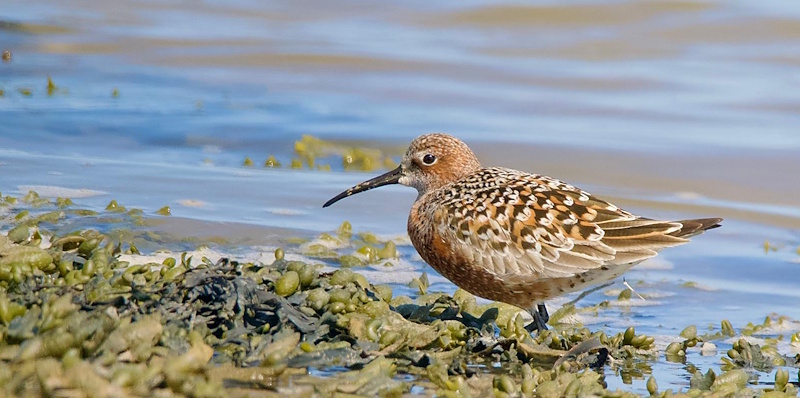
The spring migration was fairly unevenful although 22 Common Redstarts in April was a decent total. Also of interest was a Great Grey Shrike at Leasowe and a Hoopoe at Greenfield. We had single Curlew Sandpipers at Burton Mere Wetlands, Neston and Hilbre, looking glorious in full breeding plumage. The Whimbrel passage peaked in early May with 186 at Heswall/Thurstaston.
Summer
June saw up to 2,850 non-breeding Knots at Burton Mere Wetlands, a record number for the reserve. It was fascinating scanning through the flock and seeing the range of pumages on view, non-breeding pluamge (grey) to complete adult breeding plumage, and everything in between. Of added interest were two Curlew Sandpipers - one in non-breeding plumage and the other a 'red' adult.
It was good to see plenty of Manx Shearwaters with a
max of 512 off Hilbre in July. But Storm Floris, in early August,
brought
in very little in the way of sea-watching (just one Storm Petrel) - but
it did result in a
massive record count of 6,640 Black-tailed Godwits taking shelter in
the 'godwit field' in Caldy.
There were good numbers of birds on the marshes at Parkgate in August including 30 Greenshanks and 14 Spoonbills (including three yong birds hatched locally at Burton).

Autumn
Early September brought a big surprise when a flock
of 30 Glossy Ibis landed in the middle of the estuary after flying in
from the Formby and Crosby direction. At the time it was the largest
flock ever recorded in the UK, but it was soon apparent that a major
invasion was taking place and large flocks were turning up everywhere -
I think the largest was 92 at Walmsey in Cornwall. This invasion was
almost certainly the result of an exeptional breeding season in Iberia
- see "The
Glossy Ibis Invasion" for a detailed account.
September also saw a good Curlew Sandpiper passage
(see Curlew
Sandpipers 2025)
with the highest count being 22 at Hoylake, with good counts also at
Meols, Heswall and Flint. There were two outstanding sea-watching days
- one in mid-September and the other in early October. As usual Hilbre
had the highest numbers of Leach's Petrels with 34 on Sep 16th and 42
on Oct 5th, and we also had Grey Phalaropes, Sabine's Gulls and
plenty of skuas.
24 Spoonbills at Parkgate and 25 Great White Egrets on Burton Marsh were good counts in September. A Slavonian Grebe showed well on West Kirby Marine Lake at the end of September and, presumably the same one, visited irregularly over the following few weeks.
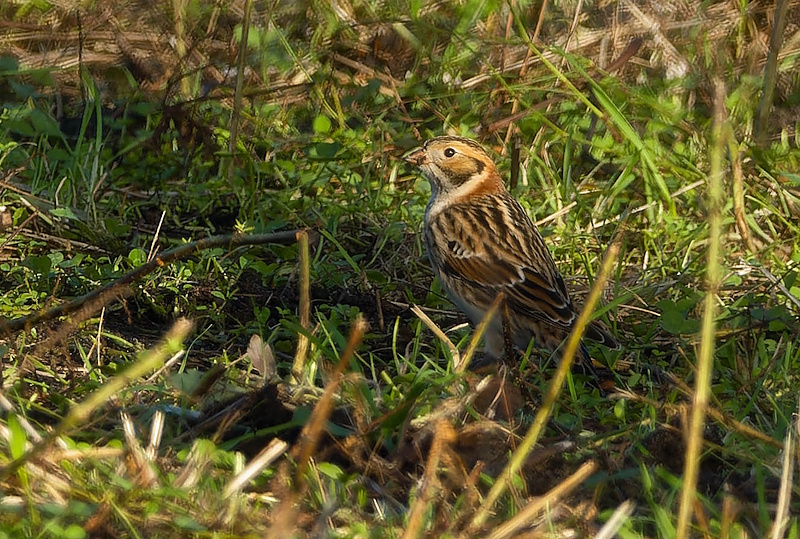
We had at least one Lapland Bunting on the coast in
November, showing partiularly well in the coastal paddocks at Leasowe.
By the end of November several Snow Buntings were recorded with three
at Leasowe and at least five at Point of Ayr and Gronant.
Winter
A Bufflehead turned up at Point of Ayr in December,
origin unknown, of course. West Kirby Marine Lake proved attractive to
a drake Scaup which showed particularly well through January, as well
as several Goldeneyes, and a small flock of Brent Geese.
A Siberian Chiffchaff was in trees near Leasowe Lighthouse in January and February. Out to sea there was a good count of 440 Great Crested Grebes on a flat calm sea in January.
It was a good winter for Short-eared Owls with at
least two or three showing most days at both Denhall Quay and Parkgate.
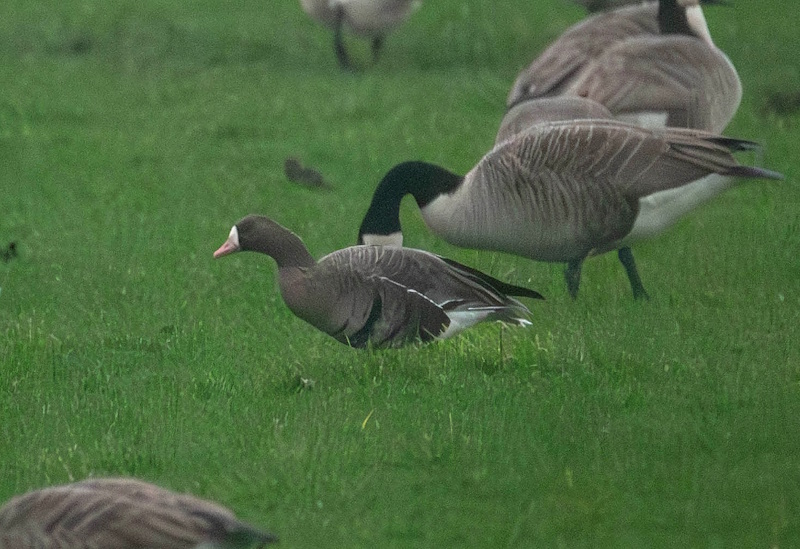
White-fronted Geese are just about annual here on
the Dee Estuary, but usually it's just one or two birds. But this
winter there was a big influx into the country with, perhaps, as many
as several tens of thousands arriving. We had three at the end of
December but it was February when numbers increased dramatically and
they had reached at least 46 by the 22nd, mainly in fields around
Burton Mere Wetlands.
Richard Smith
Colour Ring Report
Black-headed Gulls
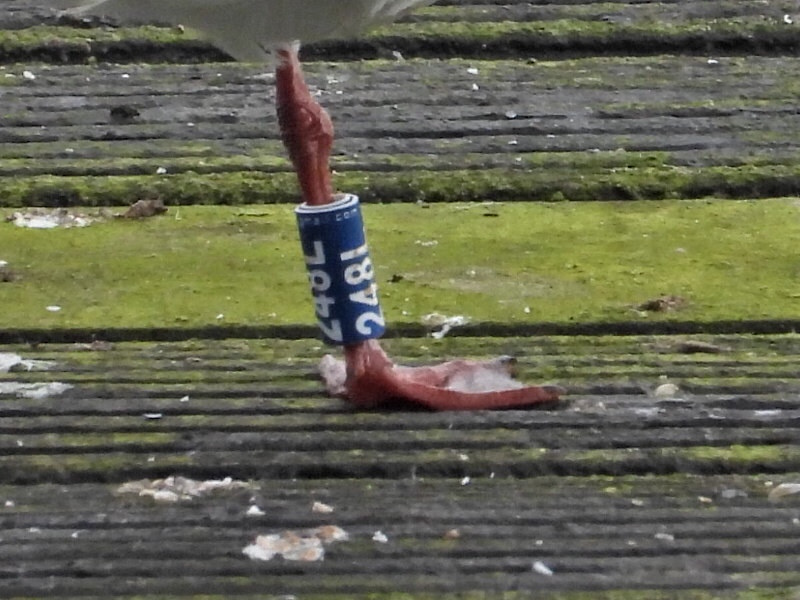
Blue 248L
Ringed at Ainsdale in December 2023.
It was recorded at Ainsdale in January and October 2024 before moving to Crosby in December.
There were three sightings of it at New Brighton Marine Lake in
February 2025 after which it flew 1,105 miles ENE to Latvia where it
was recorded at the Central Market in Riga at the end of March.
Since then it was at Croby in January 2026 and back at New Brighton Marine Lake on 19/02/2026.
Another great record from the Baltic!
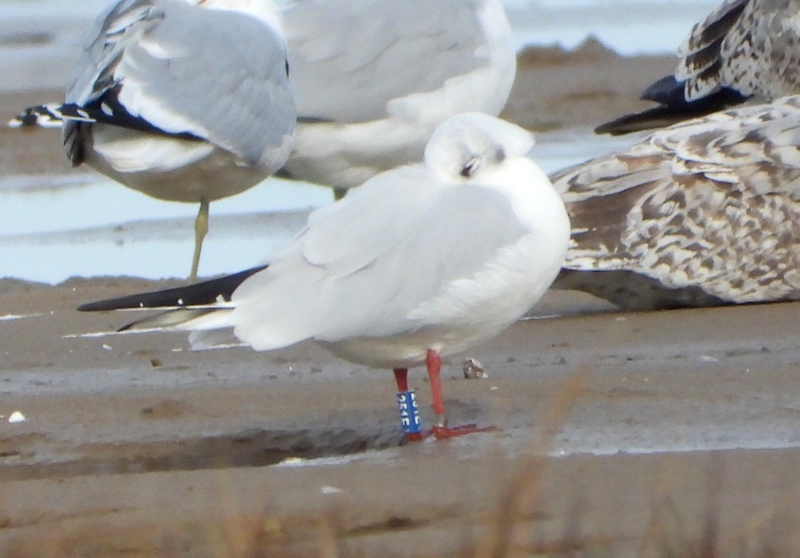
Blue 251E
Ringed at Salford Quays, Salford, in December 2022.
It was recorded at Burton Mere Wetlands at the end of April 2024 where it seems likely to have bred.
It spent the early winter of both 2024/25 and 2025/26 before turning up at Hoylake on 17/02/2026.
Dunlin
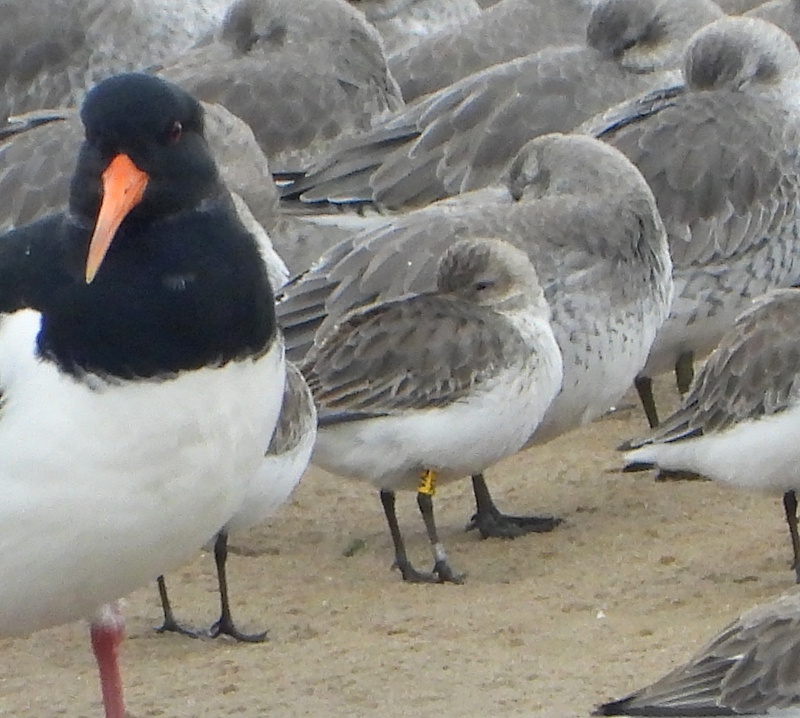
Yellow (TYA)
Ringed at Ynyslas (Cardigan Bay, Ceredigion) in October 2025, as a juvenile.
Recorded at Hoylake on 19/02/2026.
Our 13th Dunlin ringed by the Mid-Wales Ringing Group.
Great White Egret
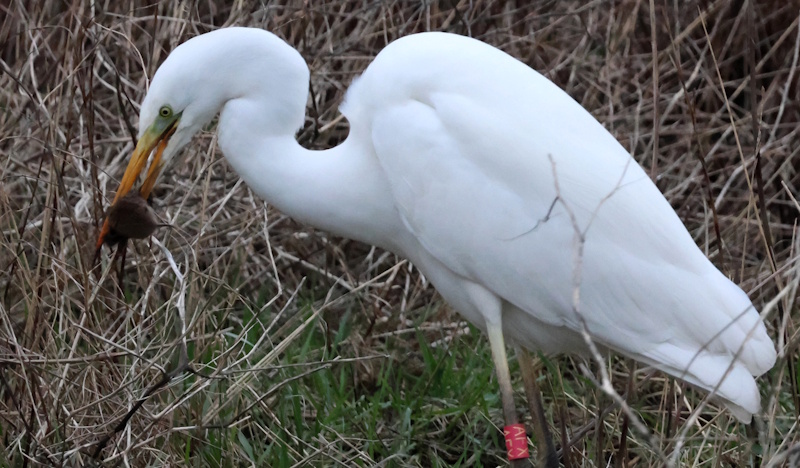
Red (AFX)
Ringed at Shapwick Heath, Somerset, in May 2024. as a nestling.
Since leaving the nest this one has only ever been recorded on the Dee
Estuary. It was on Neston Marsh in December 2024 and April 2025, and at
Parkgate (close to the prom) in February 2026.
When photographed by John Kane it had just caught a
Harvest Mouse, this is quite unusual as they are rarely seen eating
anything other than fish. Red AFX is now old enough to breed - will it
stay on the Dee or return to Somerset?
Common Buzzard
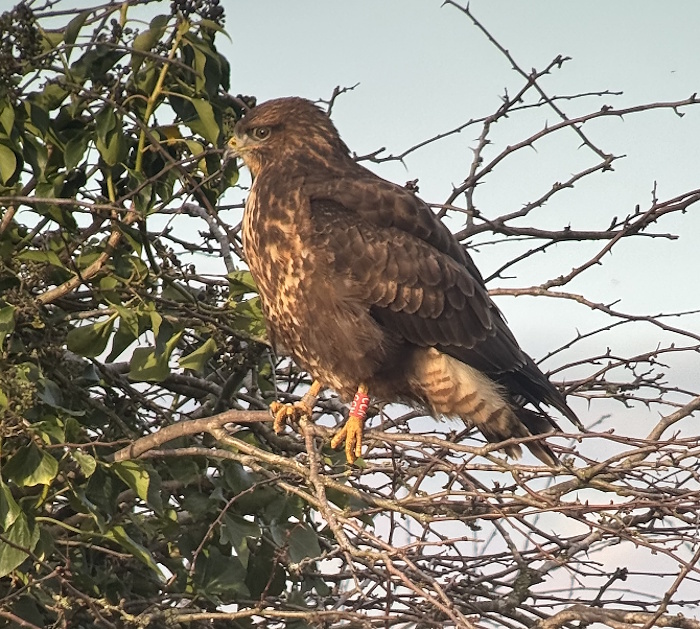
Red (CCN)
Ringed at Brimstage in June 2024 as a nestling.
Recorded at Lower Heswall on 22/02/2026.
Steve Binney, the ringer, tells us that it was ringed as part of a juvenile dispersal and adult recruitment project in the Cheshire and Wirral area.
Colour Rings were recorded by Richard Smith, Stephen Hinde, Tony Ormond, Pete Atherton, John Kane, Helena Erington, David Thompson and John Shaughnessy.
Richard Smith
February Bird News
Four Russian White-fronted Geese arriving at Burton
Mere Wetlands on the the 3rd marked a major influx of this species into
this country, BirdGuides reckoned well over 10,000 birds were involved.
Here, they peaked at Burton with 46 on the 22nd, and they were also
seen on Burton Marsh, fields near Puddington and Shotwick Boating Lake,
and Neston and Parkgate Marshes.
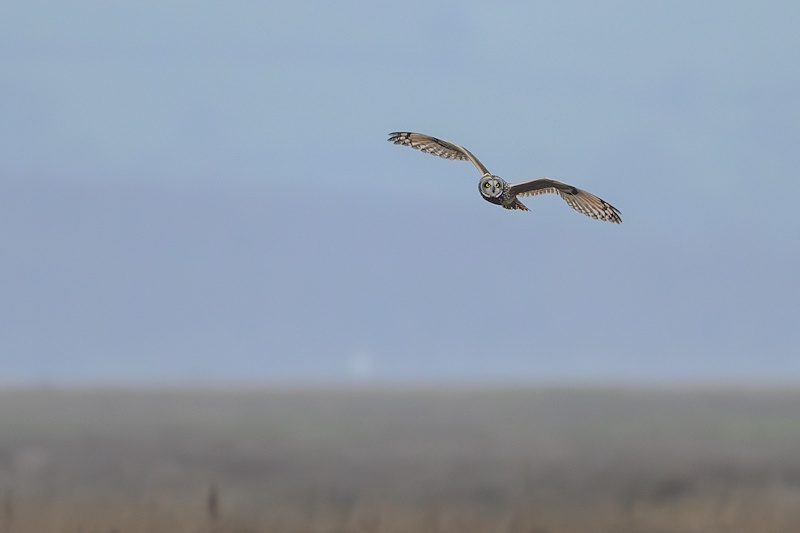
The winter continued to be a good one for
Short-eared Owls with two or three recorded most days at both Parkgate
and Denhalll Quay, and five off Heswall Golf Course on the 11th was an
excellent count. Also on the marshes a Green-winged Teal was spotted at
Parkgate a couple of times, a Bittern was seen flying in the roost at
Parkgate with 15 Marsh Harriers going into the roost at Neston Reedbed.
There were definite signs of the coming spring
including the arrival of 22 Avocets at Burton Mere Wetlands on the
22nd. Some exceptionally mild weather at the end of the month brought
in an early White Wahtail on the 24th and there was the beginning of a
good Stonechat passage with seven at Hilbre, over 20 at Neston Marsh
and 12 at Parkgate.
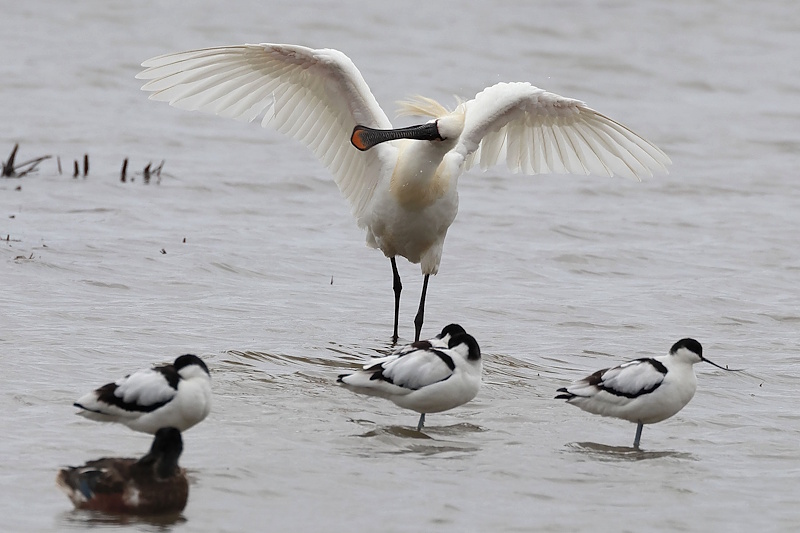
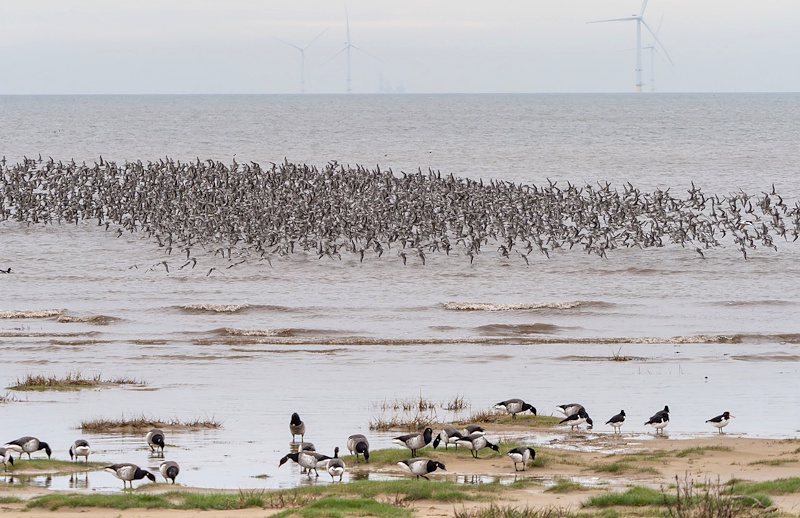
Several big high tides at Hoylake through the
month resulted in some good wader roosts at Hoylake, West Kirby and
Point of Ayr, and it was good to see them joined by Brent geese as the
photos shows below. There were two counts of 225 Brent Geese from
Hilbre during the month.
The drake Scaup continued to remain on West Kirby
Marine Lake being recorded almost every day, and a single Snow Bunting
was at Gronant. Four Cattle Egrets were in a field near Burton on the
7th,
What to expect in March
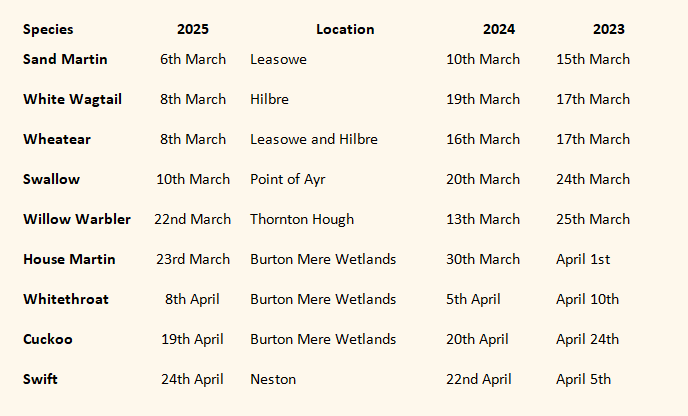
March sees the start of the spring migration,
although some exceptional mild weather at the end of February means
we've already recorded our first White Wagtail. The table below shows
the dates of the first arrivals of a selection of species over the past
three years. So if you see an early migrant let me know, and if
it's a first it will go in the 2026 table: email

Other spring migrants will likely include our first Ring Ouzel, Osprey,
Sandwich Tern and Little Gull of the year. Out to sea there will be a
build up of Common Scoters, and these could number well over 10,000 - an
impressive, if somewhat distant, sight. Another spring migrant to look
out for are Stonechats which, on some days, may be coming through in
double figures along the coast.
There are spring tides in the third week of the
month, if we get some nice strong westerlies with low pressure the sea will
likely cover the marshes and hopefully flush some Short-eared Owls
which are often in good numbers in March. There will certainly be
plenty of Pink-footed Geese flying around, and, at this time of year,
and Marsh Harriers may well be displaying.
March is a good month for rarities and in recent
years we've had Alpine Swifts, Black Redstarts, Long-billed Dowitcher,
Black Scoter, Black Guillemot and one or two Puffins off-shore.
March Highest
Tides (Liverpool Gladstone Dock):
20th 11.52hrs (GMT) 9.8m
21st 12.29hrs (GMT) 9.9m
22nd 13.08hrs (GMT) 9.7m